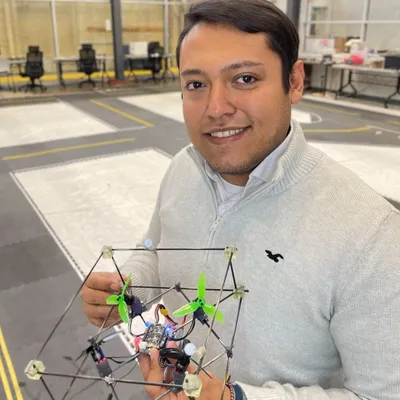
Now Assistant Professor at Oakland University
Selected publications
 2026Journal article
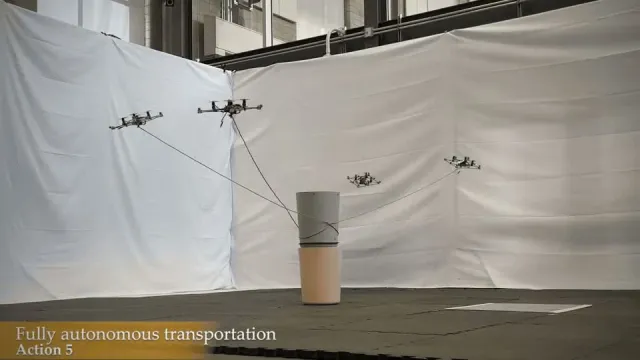
From Hitch to Lift: Autonomous Cable Interlacing by Multi-UAV Teams for Aerial Grasping and Transportation
Diego S. D'Antonio, Tongshu Wu, Subhrajit Bhattacharya, David Saldaña
IEEE Transactions on Robotics
BibTeX
@article{2026-from-hitch-to-lift-autonomous-cable-interlacing-by-multi-uav-teams-for-aerial-grasping-and-transportation, title = {From Hitch to Lift: Autonomous Cable Interlacing by Multi-UAV Teams for Aerial Grasping and Transportation}, author = {Diego S. D'Antonio and Tongshu Wu and Subhrajit Bhattacharya and David Saldaña}, year = {2026}, journal = {IEEE Transactions on Robotics}, doi = {10.1109/tro.2026.3677011} }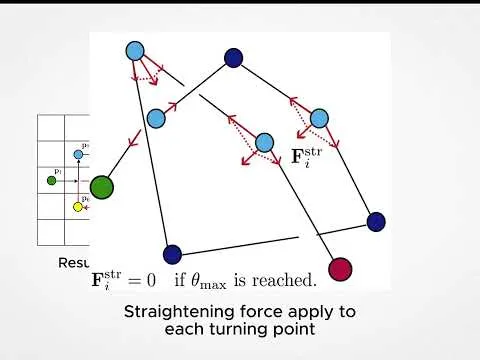 2026Conference paper
Tying Knots in the Air: Reducing the Number of Quadrotors for Aerial Knot Formation
Tongshu Wu, Edward Lopez, Diego S. D'Antonio, David Saldaña
2026 IEEE International Conference on Robotics and Automation (ICRA)
BibTeX
@inproceedings{wu2026tying, title={Tying Knots in the Air: Reducing the Number of Quadrotors for Aerial Knot Formation}, author={Wu, Tongshu and Lopez, Edward and D'Antonio, Diego S. and Saldaña, David}, booktitle={2026 IEEE International Conference on Robotics and Automation (ICRA)}, year={2026}, pages={9871--9878}, doi={10.1109/ICRA57385.2026.11697504} }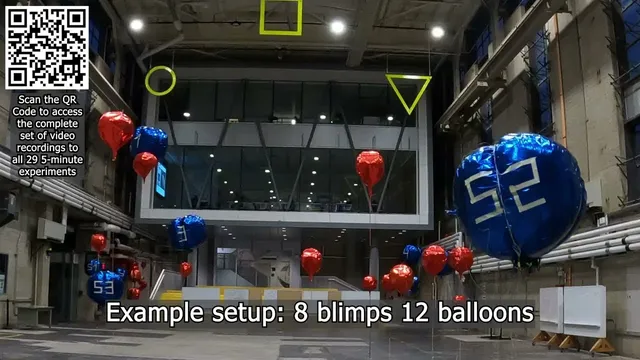 2025Conference paper
MochiSwarm: A testbed for robotic blimps in realistic environments
Jiawei Xu, Thong Vu, Diego S. D’Antonio, David Saldaña
IEEE International Conference on Robotics and Automation (ICRA)
BibTeX
@inproceedings{2025-mochiswarm, title = {MochiSwarm: A testbed for robotic blimps in realistic environments}, author = {Jiawei Xu and Thong Vu and Diego S. D’Antonio and David Saldaña}, year = {2025}, booktitle = {IEEE International Conference on Robotics and Automation (ICRA)}, url = {https://arxiv.org/abs/2503.03077} }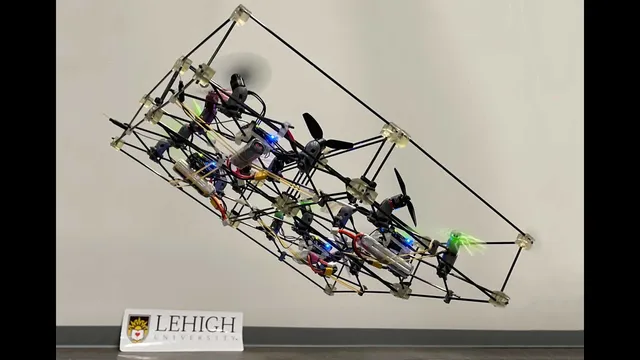 2025Journal article
Modular Multirotors: From Quadrotors to Fully-Actuated Aerial Vehicles
Jiawei Xu, Diego S. D'Antonio, David Saldaña
IEEE Transactions on Automation Science and Engineering
BibTeX
@article{2025-modular-multirotors-from-quadrotors-to-fully-actuated-aerial-vehicles, title = {Modular Multirotors: From Quadrotors to Fully-Actuated Aerial Vehicles}, author = {Jiawei Xu and Diego S. D'Antonio and David Saldaña}, year = {2025}, journal = {IEEE Transactions on Automation Science and Engineering}, pages = {19328-19339}, volume = {22}, doi = {10.1109/tase.2025.3594579}, url = {https://doi.org/10.1109/tase.2025.3594579} }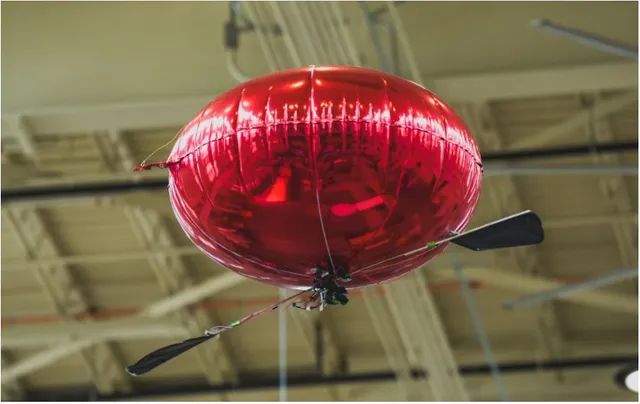 2025Conference paper
The Spinning Blimp: Design and Control of a Novel Minimalist Aerial Vehicle Leveraging Rotational Dynamics and Locomotion
Leonardo Santens, Diego S. D’Antonio, Shuhang Hou, David Saldaña
IEEE International Conference on Robotics and Automation (ICRA)
BibTeX
@inproceedings{2025-spinning-blimp, title = {The Spinning Blimp: Design and Control of a Novel Minimalist Aerial Vehicle Leveraging Rotational Dynamics and Locomotion}, author = {Leonardo Santens and Diego S. D’Antonio and Shuhang Hou and David Saldaña}, year = {2025}, booktitle = {IEEE International Conference on Robotics and Automation (ICRA)}, url = {https://arxiv.org/abs/2503.04112} }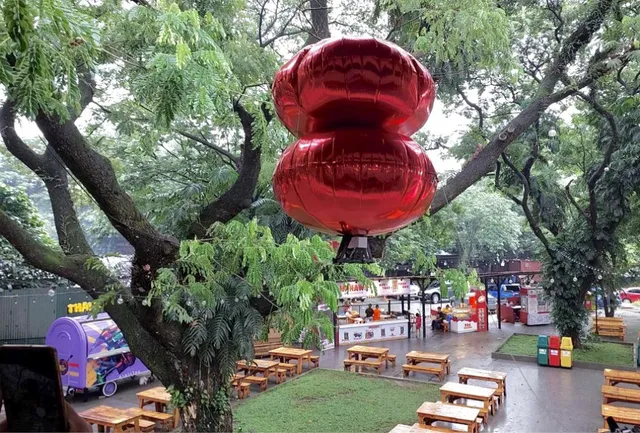 2023Conference paper
A Novel Low-Cost, Recyclable, Easy-to-Build Robot Blimp For Transporting Supplies in Hard-to-Reach Locations
Karen Li, Shuhang Hou, Matyas Negash, Jiawei Xu, Edward Jeffs, Diego S. D'Antonio, David Saldaña
2023 IEEE Global Humanitarian Technology Conference (GHTC)
BibTeX
@inproceedings{2023-a-novel-low-cost-recyclable-easy-to-build-robot-blimp-for-transporting-supplies-in-hard-to-reach-locations, title = {A Novel Low-Cost, Recyclable, Easy-to-Build Robot Blimp For Transporting Supplies in Hard-to-Reach Locations}, author = {Karen Li and Shuhang Hou and Matyas Negash and Jiawei Xu and Edward Jeffs and Diego S. D'Antonio and David Saldaña}, year = {2023}, booktitle = {2023 IEEE Global Humanitarian Technology Conference (GHTC)}, pages = {36-42}, doi = {10.1109/ghtc56179.2023.10355047}, url = {https://doi.org/10.1109/ghtc56179.2023.10355047} }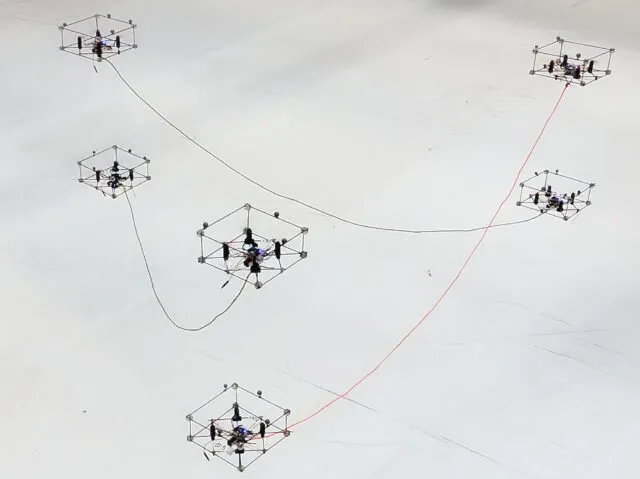 2023Conference paper
Forming and Controlling Hitches in Midair Using Aerial Robots
Diego S. D’Antonio, Subhrajit Bhattacharya, David Saldaña
2023 IEEE International Conference on Robotics and Automation (ICRA 2023)
Abstract
The use of cables for aerial manipulation has shown to be a lightweight and versatile way to interact with objects. However, fastening objects using cables is still a challenge and human is required. In this work, we propose a novel way to secure objects using hitches. The hitch can be formed and morphed in midair using a team of aerial robots with cables. The hitch's shape is modeled as a convex polygon, making it versatile and adaptable to a wide variety of objects. We propose an algorithm to form the hitch systematically. The steps can run in parallel, allowing hitches with a large number of robots to be formed in constant time. We develop a set of actions that include different actions to change the shape of the hitch. We demonstrate our methods using a team of aerial robots via simulation and actual experiments.
BibTeX
@inproceedings{hitches, title = {Forming and Controlling Hitches in Midair Using Aerial Robots}, author = {Diego S. D’Antonio and Subhrajit Bhattacharya and David Saldaña}, url = {https://youtu.be/EFig0cOaFZ4 https://arxiv.org/abs/2303.07427}, doi = { https://doi.org/10.48550/arXiv.2303.07427}, year = {2023}, date = {2023-01-01}, urldate = {2023-01-01}, booktitle = {2023 IEEE International Conference on Robotics and Automation (ICRA 2023)}, abstract = {The use of cables for aerial manipulation has shown to be a lightweight and versatile way to interact with objects. However, fastening objects using cables is still a challenge and human is required. In this work, we propose a novel way to secure objects using hitches. The hitch can be formed and morphed in midair using a team of aerial robots with cables. The hitch's shape is modeled as a convex polygon, making it versatile and adaptable to a wide variety of objects. We propose an algorithm to form the hitch systematically. The steps can run in parallel, allowing hitches with a large number of robots to be formed in constant time. We develop a set of actions that include different actions to change the shape of the hitch. We demonstrate our methods using a team of aerial robots via simulation and actual experiments.}, keywords = {aerial manipulation, aerial robot, catenary robot, hitches, modular robots}, pubstate = {published}, tppubtype = {inproceedings} }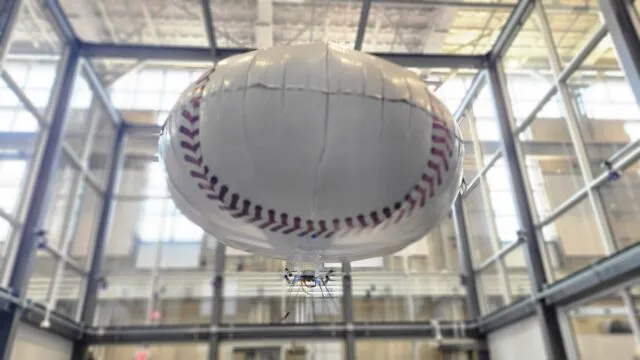 2023Conference paper
SBlimp: Design, Model, and Translational Motion Control for a Swing-Blimp
Jiawei Xu, Diego S. D’Antonio, Dominic J. Ammirato, David Saldaña
2023 IEEE/RSJ International Conference on Intelligent Robots and Systems (IROS 2023)
Abstract
We present an aerial vehicle composed of a custom quadrotor with tilted rotors and a helium balloon, called SBlimp. We propose a novel control strategy that takes advantage of the natural stable attitude of the blimp to control translational motion. Different from cascade controllers in the literature that controls attitude to achieve desired translational motion, our approach directly controls the linear velocity regardless of the heading orientation of the vehicle. As a result, the vehicle swings during the translational motion. We provide a planar analysis of the dynamic model, demonstrating stability for our controller. Our design is evaluated in numerical simulations with different physical factors and validated with experiments using a real-world prototype, showing that the SBlimp is able to achieve stable translation regardless of its orientation.
BibTeX
@inproceedings{xu2023sblimp, title = {SBlimp: Design, Model, and Translational Motion Control for a Swing-Blimp}, author = {Jiawei Xu and Diego S. D’Antonio and Dominic J. Ammirato and David Saldaña}, url = {https://www.researchgate.net/publication/372785641_SBlimp_Design_Model_and_Translational_Motion_Control_for_a_Swing-Blimp}, doi = {10.1109/IROS55552.2023.10341796}, year = {2023}, date = {2023-10-01}, urldate = {2023-10-01}, booktitle = {2023 IEEE/RSJ International Conference on Intelligent Robots and Systems (IROS 2023)}, organization = {IEEE Robotics and Automation Society}, abstract = {We present an aerial vehicle composed of a custom quadrotor with tilted rotors and a helium balloon, called SBlimp. We propose a novel control strategy that takes advantage of the natural stable attitude of the blimp to control translational motion. Different from cascade controllers in the literature that controls attitude to achieve desired translational motion, our approach directly controls the linear velocity regardless of the heading orientation of the vehicle. As a result, the vehicle swings during the translational motion. We provide a planar analysis of the dynamic model, demonstrating stability for our controller. Our design is evaluated in numerical simulations with different physical factors and validated with experiments using a real-world prototype, showing that the SBlimp is able to achieve stable translation regardless of its orientation.}, keywords = {aerial robot, blimp, control}, pubstate = {published}, tppubtype = {inproceedings}, pages = {6977–6982} }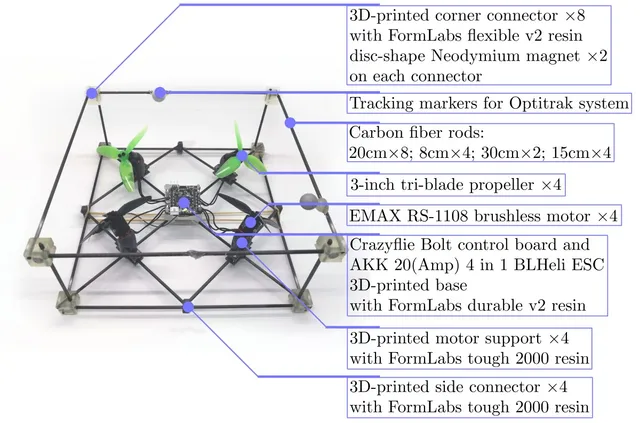 2022Workshop extended abstract
Customizable-ModQuad: a Versatile Hardware-Software Platform to Develop Lightweight and Low-cost Aerial Vehicles
Diego S. D’Antonio, Jiawei Xu, Gustavo A. Cardona, David Saldaña
IROS 2022 Workshop: Miniature Robot Platforms for Full Scale Autonomous Vehicle Research
BibTeX
@misc{2022-customizable-modquad-a-versatile-hardware-software-platform-to-develop-lightweight-and-low-cost-aerial-vehicles, title = {Customizable-ModQuad: a Versatile Hardware-Software Platform to Develop Lightweight and Low-cost Aerial Vehicles}, author = {Diego S. D’Antonio and Jiawei Xu and Gustavo A. Cardona and David Saldaña}, year = {2022}, howpublished = {IROS 2022 Workshop: Miniature Robot Platforms for Full Scale Autonomous Vehicle Research}, url = {https://www.researchgate.net/publication/368390753_Customizable-ModQuad_a_Versatile_Hardware-Software_Platform_to_Develop_Lightweight_and_Low-cost_Aerial_Vehicles} }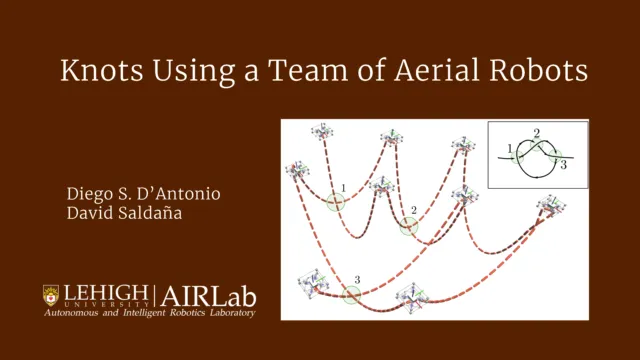 2022Conference paper
Folding Knots Using a Team of Aerial Robots
Diego S. D’Antonio, David Saldaña
2022 IEEE/RSJ International Conference on Intelligent Robots and Systems (IROS)
Abstract
From ancient times, humans have been using cables and ropes to tie, carry, and manipulate objects by folding knots. However, automating knot folding is challenging because it requires dexterity to move a cable over and under itself. In this paper, we propose a method to fold knots in midair using a team of aerial vehicles. We take advantage of the fact that vehicles are able to fly in between cable segments without any re-grasping. So the team grasps the cable from the floor, and releases it once the knot is folded. Based on a composition of catenary curves, we simplify the complexity of dealing with an infinite-dimensional configuration space of the cable, and formally propose a new knot representation. Such representation allows us to design a trajectory that can be used to fold knots using a leader-follower approach. We show that our method works for different types of knots in simulations. Additionally, we show that our solution is also computationally efficient and can be executed in real-time.
BibTeX
@inproceedings{9981363, title = {Folding Knots Using a Team of Aerial Robots}, author = {Diego S. D’Antonio and David Saldaña}, url = {https://arxiv.org/abs/2208.01482}, doi = {10.1109/IROS47612.2022.9981363}, year = {2022}, date = {2022-01-01}, urldate = {2022-01-01}, booktitle = {2022 IEEE/RSJ International Conference on Intelligent Robots and Systems (IROS)}, pages = {3372-3377}, abstract = {From ancient times, humans have been using cables and ropes to tie, carry, and manipulate objects by folding knots. However, automating knot folding is challenging because it requires dexterity to move a cable over and under itself. In this paper, we propose a method to fold knots in midair using a team of aerial vehicles. We take advantage of the fact that vehicles are able to fly in between cable segments without any re-grasping. So the team grasps the cable from the floor, and releases it once the knot is folded. Based on a composition of catenary curves, we simplify the complexity of dealing with an infinite-dimensional configuration space of the cable, and formally propose a new knot representation. Such representation allows us to design a trajectory that can be used to fold knots using a leader-follower approach. We show that our method works for different types of knots in simulations. Additionally, we show that our solution is also computationally efficient and can be executed in real-time.}, keywords = {aerial manipulation, aerial robot, catenary robot}, pubstate = {published}, tppubtype = {inproceedings} }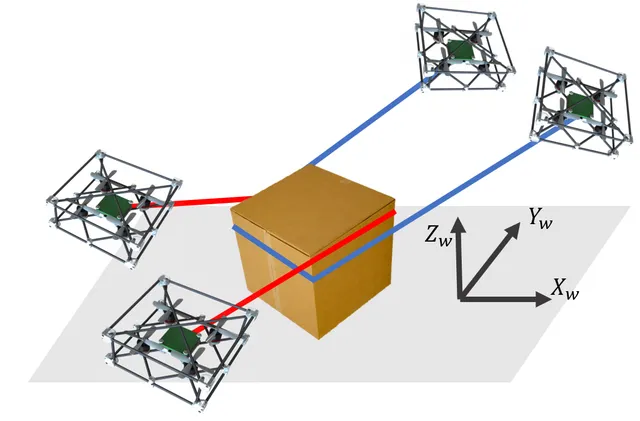 2021Conference paper
Adaptive Control for Cooperative Aerial Transportation Using Catenary Robots
Gustavo A. Cardona, Diego S. D’Antonio, Rafael Fierro, David Saldaña
2021 Aerial Robotic Systems Physically Interacting with the Environment (AIRPHARO)
BibTeX
@inproceedings{9571068, title = {Adaptive Control for Cooperative Aerial Transportation Using Catenary Robots}, author = {Gustavo A. Cardona and Diego S. D’Antonio and Rafael Fierro and David Saldaña}, url = {https://youtu.be/MeEGL_PUBx4}, doi = {10.1109/AIRPHARO52252.2021.9571068}, year = {2021}, date = {2021-01-01}, urldate = {2021-01-01}, booktitle = {2021 Aerial Robotic Systems Physically Interacting with the Environment (AIRPHARO)}, pages = {1-8}, keywords = {aerial manipulation, aerial robot, cable, catenary robot, quadrotor}, pubstate = {published}, tppubtype = {inproceedings} }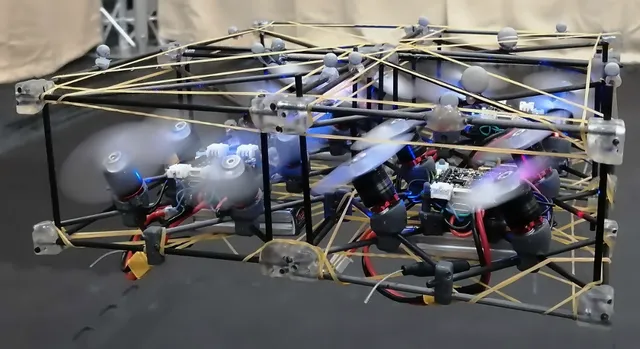 2021Conference paper
H-ModQuad: Modular Multi-Rotors with 4, 5, and 6 Controllable DOF
Jiawei Xu, Diego S. D’Antonio, David Saldaña
2021 IEEE International Conference on Robotics and Automation (ICRA)
Abstract
Traditional aerial vehicles are usually custom-designed for specific tasks. Although they offer an efficient solution, they are not always able to adapt to changes in the task specification, e.g., increasing the payload. This applies to quadrotors, having a maximum payload and only four controllable degrees of freedom, limiting their adaptability to the task’s variations. We propose a versatile modular robotic system that can increase its payload and degrees of freedom by assembling heterogeneous modules; we call it H-ModQuad. It consists of cuboid modules propelled by quadrotors with tilted propellers that can generate forces in different directions. By connecting different types of modules, an H-ModQuad can increase its controllable degrees of freedom from 4 to 5 and 6. We model the general structure and propose three controllers, one for each number of controllable degrees of freedom. We extend the concept of the actuation ellipsoid to find the best reference orientation that can maximize the performance of the structure. Our approach is validated with experiments using actual robots, showing the independence of the translation and orientation of a structure.
BibTeX
@inproceedings{2021-h-modquad-modular-multi-rotors-with-4-5-and-6-controllable-dof, title = {H-ModQuad: Modular Multi-Rotors with 4, 5, and 6 Controllable DOF}, author = {Jiawei Xu and Diego S. D’Antonio and David Saldaña}, url = {https://youtu.be/olKYuWPWxHo https://arxiv.org/pdf/2106.04048.pdf}, doi = {10.1109/ICRA48506.2021.9561016}, isbn = {978-1-7281-9077-8}, year = {2021}, date = {2021-10-18}, urldate = {2021-10-18}, booktitle = {2021 IEEE International Conference on Robotics and Automation (ICRA)}, abstract = {Traditional aerial vehicles are usually custom-designed for specific tasks. Although they offer an efficient solution, they are not always able to adapt to changes in the task specification, e.g., increasing the payload. This applies to quadrotors, having a maximum payload and only four controllable degrees of freedom, limiting their adaptability to the task’s variations. We propose a versatile modular robotic system that can increase its payload and degrees of freedom by assembling heterogeneous modules; we call it H-ModQuad. It consists of cuboid modules propelled by quadrotors with tilted propellers that can generate forces in different directions. By connecting different types of modules, an H-ModQuad can increase its controllable degrees of freedom from 4 to 5 and 6. We model the general structure and propose three controllers, one for each number of controllable degrees of freedom. We extend the concept of the actuation ellipsoid to find the best reference orientation that can maximize the performance of the structure. Our approach is validated with experiments using actual robots, showing the independence of the translation and orientation of a structure.}, keywords = {aerial robot, modquad, modular robots, multi-rotor, quadrotor}, pubstate = {published}, tppubtype = {inproceedings} }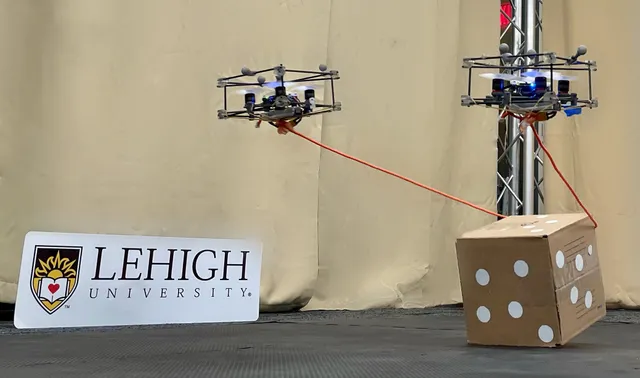 2021Conference paper
Non-Prehensile Manipulation of Cuboid Objects Using a Catenary Robot
Gustavo A. Cardona, Diego S. D’Antonio, Cristian-Ioan Vasile, David Saldaña
Abstract
Transporting objects using quadrotors with cables has been widely studied in the literature. However, most of those approaches assume that the cables are previously attached to the load by human intervention. In tasks where multiple objects need to be moved, the efficiency of the robotic system is constrained by the requirement of manual labor. Our approach uses a non-stretchable cable connected to two quadrotors, which we call the catenary robot, that fully automates the transportation task. Using the cable, we can roll and drag the cuboid object (box) on planar surfaces. Depending on the surface type, we choose the proper action, dragging for low friction, and rolling for high friction. Therefore, the transportation process does not require any human intervention as we use the cable to interact with the box without requiring fastening. We validate our control design in simulation and with actual robots, where we show them rolling and dragging boxes to track desired trajectories.
BibTeX
@inproceedings{2021-non-prehensile-manipulation-of-cuboid-objects-using-a-catenary-robot, title = {Non-Prehensile Manipulation of Cuboid Objects Using a Catenary Robot}, author = {Gustavo A. Cardona and Diego S. D’Antonio and Cristian-Ioan Vasile and David Saldaña}, url = {https://youtu.be/Ou6DPlXPE7A}, year = {2021}, date = {2021-08-13}, urldate = {2021-08-13}, abstract = {Transporting objects using quadrotors with cables has been widely studied in the literature. However, most of those approaches assume that the cables are previously attached to the load by human intervention. In tasks where multiple objects need to be moved, the efficiency of the robotic system is constrained by the requirement of manual labor. Our approach uses a non-stretchable cable connected to two quadrotors, which we call the catenary robot, that fully automates the transportation task. Using the cable, we can roll and drag the cuboid object (box) on planar surfaces. Depending on the surface type, we choose the proper action, dragging for low friction, and rolling for high friction. Therefore, the transportation process does not require any human intervention as we use the cable to interact with the box without requiring fastening. We validate our control design in simulation and with actual robots, where we show them rolling and dragging boxes to track desired trajectories.}, keywords = {aerial manipulation, aerial robot, cable, catenary robot, quadrotor}, pubstate = {published}, tppubtype = {inproceedings} }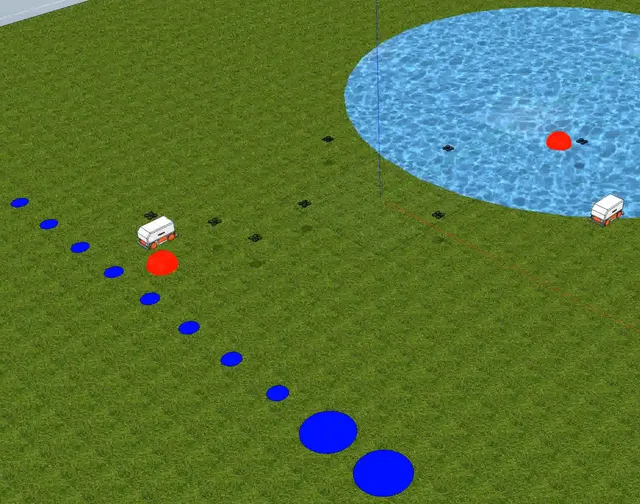 2021Journal article
Resilient Task Allocation in Heterogeneous Multi-Robot Systems
Siddharth Mayya, Diego S. D’antonio, David Saldaña, Vijay Kumar
IEEE Robotics and Automation Letters
BibTeX
@article{9349130, title = {Resilient Task Allocation in Heterogeneous Multi-Robot Systems}, author = {Siddharth Mayya and Diego S. D’antonio and David Saldaña and Vijay Kumar}, url = {https://youtu.be/TRceQUiTnik}, doi = {10.1109/LRA.2021.3057559}, year = {2021}, date = {2021-01-01}, urldate = {2021-01-01}, journal = {IEEE Robotics and Automation Letters}, volume = {6}, number = {2}, pages = {1327-1334}, keywords = {heterogeneous robots, robot networks, robot swarms, task allocation}, pubstate = {published}, tppubtype = {article} }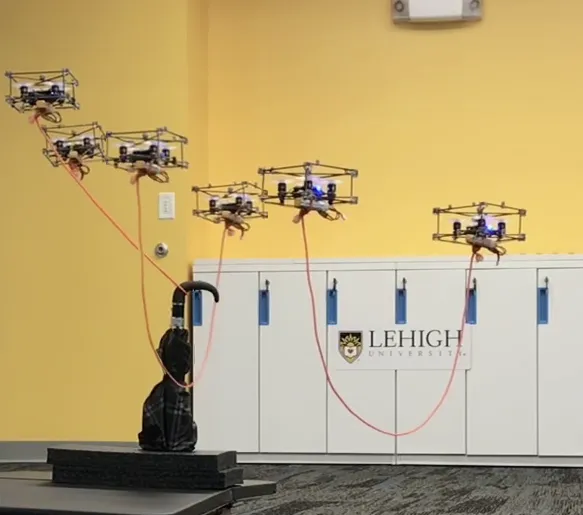 2021Journal article
The Catenary Robot: Design and Control of a Cable Propelled by Two Quadrotors
Diego S. D’Antonio, Gustavo A. Cardona, David Saldaña
IEEE Robotics and Automation Letters
Abstract
Transporting objects using aerial robots has been widely studied in the literature. Still, those approaches always assume that the connection between the quadrotor and the load is made in a previous stage. However, that previous stage usually requires human intervention, and autonomous procedures to locate and attach the object are not considered. Additionally, most of the approaches assume cables as rigid links, but manipulating cables requires considering the state when the cables are hanging. In this work, we design and control a catenary robot. Our robot is able to transport hook-shaped objects in the environment. The robotic system is composed of two quadrotors attached to the two ends of a cable. By defining the catenary curve with five degrees of freedom, position in 3-D, orientation in z-axis, and span, we can drive the two quadrotors to track a given trajectory. We validate our approach with simulations and real robots. We present four different scenarios of experiments. Our numerical solution is computationally fast and can be executed in real-time.
BibTeX
@article{2021-the-catenary-robot-design-and-control-of-a-cable-propelled-by-two-quadrotors,

title = {The Catenary Robot: Design and Control of a Cable Propelled by Two Quadrotors},

author = {Diego S. D’Antonio and Gustavo A. Cardona and David Saldaña },

url = {https://youtu.be/3SaKKjl6os0},

doi = {10.1109/LRA.2021.3062603},

issn = {2377-3766},

year  = {2021},

date = {2021-02-26},

urldate = {2021-02-26},

journal = {IEEE Robotics and Automation Letters},

volume = {6},

number = {2},

pages = {3857-3863},

abstract = {Transporting objects using aerial robots has been widely studied in the literature. Still, those approaches always assume that the connection between the quadrotor and the load is made in a previous stage. However, that previous stage usually requires human intervention, and autonomous procedures to locate and attach the object are not considered. Additionally, most of the approaches assume cables as rigid links, but manipulating cables requires considering the state when the cables are hanging. In this work, we design and control a catenary robot. Our robot is able to transport hook-shaped objects in the environment. The robotic system is composed of two quadrotors attached to the two ends of a cable. By defining the catenary curve with five degrees of freedom, position in 3-D, orientation in z-axis, and span, we can drive the two quadrotors to track a given trajectory. We validate our approach with simulations and real robots. We present four different scenarios of experiments. Our numerical solution is computationally fast and can be executed in real-time.},

keywords = {aerial manipulation, aerial robot, cable, catenary robot, quadrotor},

pubstate = {published},

tppubtype = {article}

}